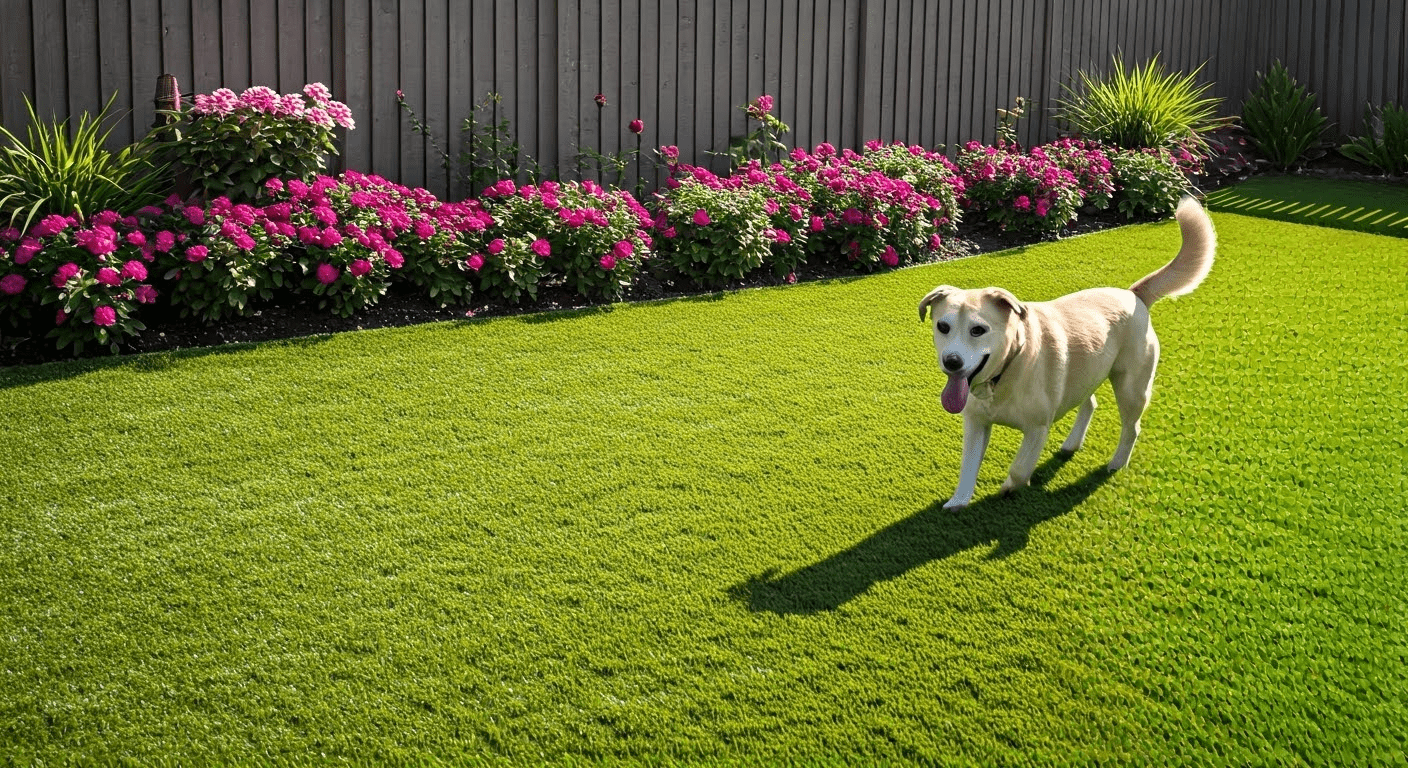
Artificial turf is a popular choice for homeowners with dogs. It stays green year-round, requires less maintenance than natural grass, and holds up well to heavy use. But many homeowners are surprised to learn that artificial turf still needs regular care—especially when it comes to pet waste.
Without consistent pet waste removal, turf can trap odor, bacteria, and residue that make your yard unpleasant over time. Here’s what homeowners should know to keep artificial turf clean, fresh, and safe.
Why Pet Waste Is a Bigger Problem on Artificial Turf
Unlike natural grass, artificial turf doesn’t absorb waste or break it down naturally. Instead, waste sits on the surface or seeps into the infill, backing, and seams.
This can lead to:
- Strong lingering odors
- Bacteria buildup
- Sticky or stained areas
- Unpleasant smells after rain
- Reduced turf lifespan
That’s why professional pet waste removal is especially important for homes with turf.
Why Scooping Alone Isn’t Enough for Turf
Many homeowners scoop solid waste regularly but skip deeper cleaning. Unfortunately, that only solves part of the problem.
Even after scooping:
- Bacteria remains in the turf fibers
- Urine residue settles into infill
- Odor intensifies in warm weather
- Moisture reactivates smells
Without proper pet waste removal and sanitizing, turf can start to smell worse than natural grass.
How Professional Pet Waste Removal Protects Artificial Turf
Professional services go beyond basic scooping. When done correctly, pet waste removal for turf includes:
• Thorough Waste Removal
All solid waste is removed using a grid-style inspection so nothing is missed.
• Proper Disposal
Waste is taken off your property, keeping trash bins clean and odor-free.
• Sanitizing Treatments
Pet-safe sanitizers kill bacteria trapped in turf fibers and infill.
• Deodorizing
Odor is neutralized at the source—not just masked.
This approach keeps artificial turf cleaner, fresher, and safer for pets and people.
When Homeowners Should Schedule Turf Cleaning
Homes with artificial turf benefit from consistent service. Most homeowners choose:
- Weekly pet waste removal for multiple dogs
- Bi-weekly service for lower-use yards
- One-time deep cleans after heavy buildup
- Monthly sanitizing for odor control
Warm weather and rain often increase odor, making routine service even more important.
Health and Safety Benefits for Pets and Families
Artificial turf can hold bacteria longer than natural grass if not cleaned properly. Without regular pet waste removal, harmful organisms can linger where pets walk, roll, and play.
Professional cleanup helps:
- Reduce bacteria and parasites
- Prevent paw contamination
- Keep turf safe for kids
- Maintain a hygienic outdoor space
This is especially important for households with multiple dogs or children who play on the turf.
Simple Tips to Keep Turf Fresh Between Visits
Homeowners can support turf cleanliness by:
- Rinsing high-use areas weekly
- Scheduling regular waste removal
- Adding deodorizing treatments during summer
- Avoiding harsh chemicals not designed for turf
- Keeping debris and leaves off the surface
These steps work best when paired with professional pet waste removal.