Top Tips for Keeping Your Yard Clean With Multiple Dogs
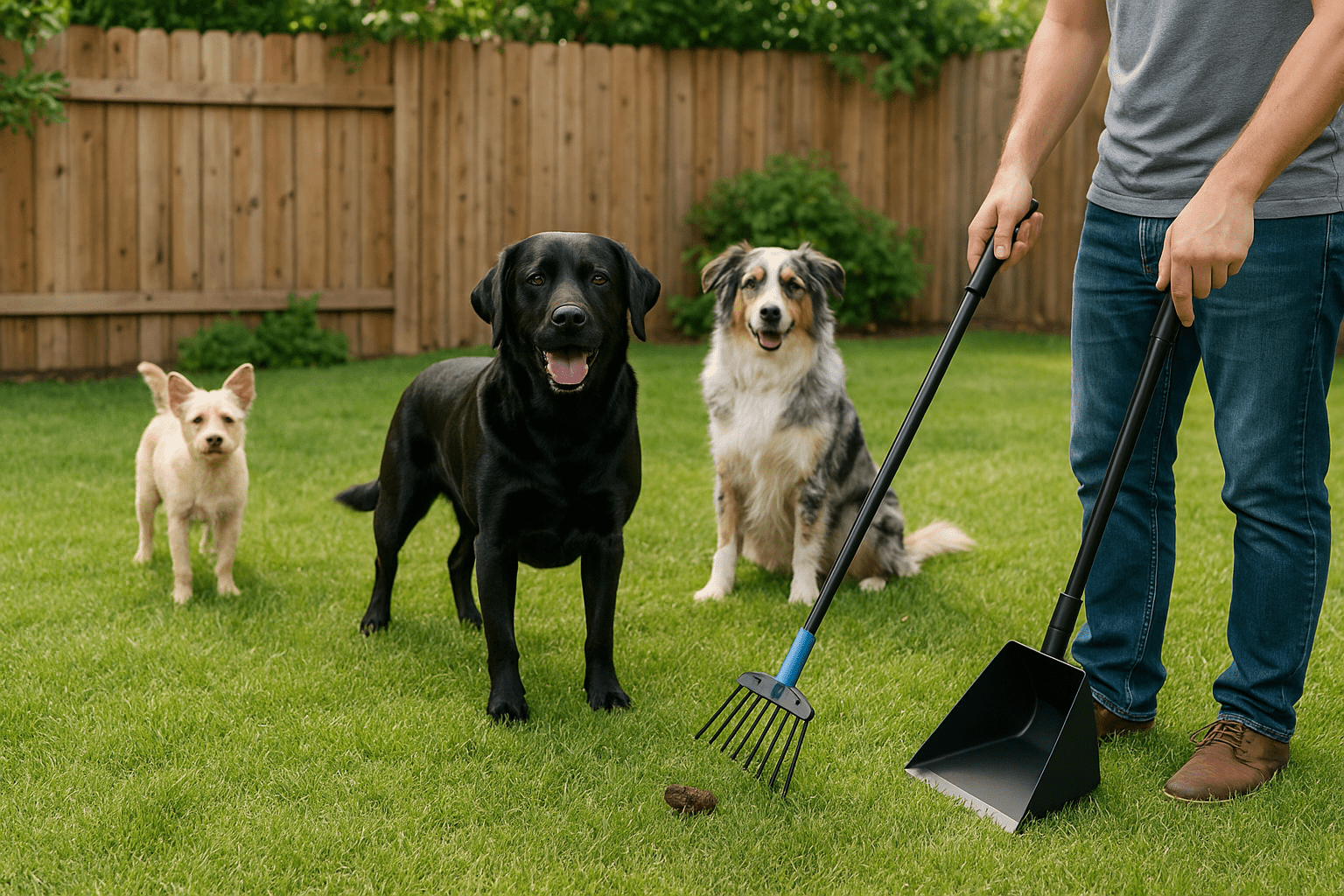
There is a big difference between owning one dog and owning two, three, or more. One dog is manageable. Multiple dogs turns your yard into a full-time maintenance project that never quite feels finished. If you share your home with more than one dog in Newark, TX, you already know exactly what we're talking about — the constant accumulation, the persistent odor, the brown patches that keep spreading no matter how much you try to stay on top of it.
The good news is that keeping a multi-dog yard clean is absolutely achievable. It just requires the right combination of habits, strategies, and professional support to make it work consistently. At Top Dung, we service multi-dog households across Newark, TX every single week and we've learned what works, what doesn't, and what makes the biggest difference for families trying to keep up with the demands of a yard full of dogs.
This guide covers everything you need to know — from daily habits to professional services — to keep your multi-dog yard genuinely clean, healthy, and enjoyable year round.
Understand the Scale of the Problem First
Before diving into solutions, it helps to understand exactly what you're dealing with when you have multiple dogs. The average dog produces approximately 274 pounds of waste per year. If you have two dogs, that's 548 pounds annually. Three dogs brings you close to 825 pounds of waste deposited in your yard every single year.
That number is not meant to overwhelm you — it's meant to reframe the way you think about yard maintenance with multiple dogs. This is not a problem that occasional cleanup can solve. It requires a consistent, systematic approach that matches the scale of what your dogs are actually producing.
The yards that stay clean with multiple dogs are the yards where the owners have accepted that reality and built a maintenance routine around it rather than trying to stay ahead of it reactively. With that mindset in place, here are the strategies that actually work.
Tip 1 — Establish a Designated Bathroom Zone
One of the most effective things you can do for a multi-dog yard is train your dogs to use a specific designated area for bathroom breaks. When all of your dogs are eliminating in the same general zone, the waste is concentrated in one manageable area rather than distributed randomly across your entire yard.
A designated bathroom zone makes cleanup dramatically faster and more thorough — whether you're doing it yourself or having a professional service handle it. It also protects the rest of your lawn from the widespread nitrogen burn and bacterial contamination that comes with random waste distribution across the full yard.
Creating a designated zone works best when you start with consistent training — always taking your dogs to the same area and rewarding them for using it. Over time, most dogs will default to the designated area on their own. Some homeowners use gravel or mulch in the designated zone to make cleanup easier and to protect the surrounding grass from the concentrated waste impact.
Tip 2 — Increase Your Cleanup Frequency
With one dog, weekly cleanup is typically sufficient to keep a yard healthy and odor-free. With multiple dogs, weekly is the absolute minimum — and for many multi-dog households, it is not enough.
The accumulation rate in a multi-dog yard is exponentially higher than a single-dog yard, and the bacterial and odor buildup that results moves faster than most owners expect. During hot Texas summers, a two or three dog yard left for a full week between cleanups will develop noticeable odor and visible lawn damage that would take a single-dog yard several weeks to reach.
For multi-dog households with two dogs, weekly professional pet waste removal service is the baseline. For three or more dogs — or for households with large breeds — twice-weekly service is worth serious consideration. The cost difference between weekly and twice-weekly professional service is almost always less than the cost of lawn repair from accumulated waste damage.
Tip 3 — Don't Skip the Sanitizing and Deodorizing
In a single-dog yard, periodic sanitizing and deodorizing is a valuable enhancement to basic scooping service. In a multi-dog yard, it is essentially a necessity.
The volume of waste produced by multiple dogs means that bacteria and odor compounds accumulate in the soil and on grass surfaces at a rate that scooping alone cannot keep up with. Without regular sanitizing and deodorizing treatments, multi-dog yards almost universally develop persistent odor issues — the kind that follow you inside on your shoes and your dogs' paws and never fully go away no matter how often the yard gets scooped.
Professional pet-safe sanitizing and deodorizing treatments break down the odor compounds and reduce bacterial contamination at the surface level on a regular basis, preventing the kind of deep buildup that becomes very difficult to reverse once it's established. For multi-dog households in Newark, TX, adding sanitizing and deodorizing to your regular pooper scooper service is one of the best investments you can make in your yard and your home environment.
Tip 4 — Rotate Your Dogs' Access to Different Yard Areas
If your yard is large enough, rotating which areas your dogs have access to on different days is a surprisingly effective strategy for managing wear and waste concentration. By giving heavily used areas periodic breaks, you allow the grass time to recover and reduce the rate at which any single section of your yard accumulates waste and bacterial contamination.
This is particularly useful during summer months when heat accelerates bacterial growth and lawn damage. Keeping dogs out of a heavily used section for even a few days while it receives cleanup and treatment gives the grass a meaningful recovery window that helps maintain overall lawn health across a multi-dog yard.
Simple temporary fencing or barriers can make rotation easy to implement without requiring significant changes to your yard layout or your dogs' daily routines.
Tip 5 — Address Odor Proactively, Not Reactively
One of the most common mistakes multi-dog homeowners make is waiting until odor becomes a noticeable problem before taking action. By the time you can clearly smell your yard from the patio, the bacterial and odor compound buildup in the soil has already reached a level that requires significant treatment to address.
Proactive odor management means scheduling regular sanitizing and deodorizing treatments before odor becomes noticeable — not in response to it. This approach maintains a baseline level of freshness in the yard that reactive treatment can never quite achieve, because you're preventing deep buildup rather than trying to reverse it after the fact.
The frequency of proactive treatments that makes sense for your yard depends on the number of dogs, the size of the yard, and the time of year. A professional pet waste removal service like Top Dung can help you establish the right treatment schedule for your specific situation.
Tip 6 — Keep High-Traffic Areas Well Maintained
In a multi-dog yard, certain areas inevitably receive more use than others — the areas nearest to the back door, along fence lines, and in corners tend to be the highest-traffic zones for most dogs. These areas accumulate waste and develop bacterial buildup and odor problems faster than the rest of the yard.
Giving these high-traffic zones extra attention during cleanup visits and prioritizing them for sanitizing and deodorizing treatments keeps the worst problem areas under control and prevents them from becoming the persistent odor source that affects the whole yard. Your professional pooper scooper service should be walking a systematic grid that catches all of these areas on every visit — not just the obvious open spaces in the middle of the yard.
Tip 7 — Maintain Your Lawn Actively
A healthy, dense lawn is more resistant to the damage caused by dog waste than thin, stressed grass. Multi-dog homeowners who invest in regular lawn care — proper mowing height, appropriate watering schedules, seasonal fertilization — create a more resilient turf that recovers faster from the nitrogen burn and bacterial stress that pet waste causes.
Keeping your grass at the right height matters specifically for multi-dog yards. Grass that is too short has less surface area and root depth to buffer the impact of concentrated waste deposits. Grass that is too tall makes it harder to locate and remove all waste during cleanup visits. A consistent mowing schedule that keeps the grass at the appropriate height for your specific turf variety makes a meaningful difference in how well your yard holds up under multi-dog conditions.
Tip 8 — Consider Professional Service as Your Foundation
Everything in this guide is more effective when it's built on a foundation of professional, consistent pet waste removal service. DIY cleanup in a multi-dog yard is the approach most likely to fall behind — because life gets busy, the task is unpleasant, and the volume of waste produced by multiple dogs means that even a week of missed cleanup creates a significant problem.
Professional pooper scooper service from a provider like Top Dung gives multi-dog households a reliable baseline of cleanliness that doesn't depend on finding time in a packed schedule to handle one of the most unpleasant yard chores imaginable. Our technicians show up on schedule, walk a systematic grid, remove all waste from your property, and confirm the job is done — every single time.
For multi-dog households in Newark, TX, professional weekly pet waste removal service combined with regular sanitizing and deodorizing treatments is the most effective, most consistent, and frankly most stress-free approach to maintaining a yard that works for your whole family — dogs included.